








-50x50.png "ClearWhite GlassRestore Pro | Polish Cermin Kereta | Car Glass Polish Watermark and Water Spot Remover | Polish Cermin Hadapan | Kesan Wiper")


-(1)-50x50.png "EziSac Lizard Repellent - Fast Acting Effective Natural Long-Lasting No Mess No Sticky Formula to Halau Cicak")

Floor Cleaners for Every Surface at Home
A floor can look clean from the doorway and still feel sticky under bare feet, show dull traffic paths, or leave paw prints visible the moment sunlight hits. The right floor cleaners solve the mess you actually have without leaving behind haze, slippery residue, or damage to the finish. That starts with matching the formula to your floor, not grabbing the strongest bottle on the shelf.
Start With the Surface, Not the Stain
A powerful degreaser may be exactly what a greasy kitchen tile needs, but it can be a poor choice for unsealed wood. Likewise, a heavy, high-foam cleaner can make a floor look freshly washed while creating problems for a robot mop, spray mop, or water-based cleaning machine.
Before choosing a cleaner, identify whether your floor is ceramic or porcelain tile, vinyl, laminate, sealed hardwood, natural stone, concrete, or a coated surface. It sounds basic, but many cleaning frustrations come from treating every hard floor the same way.
Tile and vinyl are usually the easiest to clean. They handle everyday dirt, food splashes, and muddy footprints well, especially with a neutral floor-cleaning formula. Laminate needs less water and a cleaner that dries quickly. Too much moisture can creep into seams and cause edges to swell. Sealed hardwood also benefits from a low-moisture approach, while unsealed wood needs extra caution and product guidance specific to the finish.
Natural stone is the surface that deserves the most attention. Marble, limestone, and some terrazzo floors can react badly to acidic formulas. A cleaner that cuts soap scum beautifully on bathroom tile may etch a stone floor and leave it permanently dull. When in doubt, choose a pH-neutral cleaner designed for delicate surfaces and test it in an inconspicuous spot first.
What Good Floor Cleaners Should Do
The best cleaner is not always the one with the strongest smell or the biggest foam. A useful product should lift everyday dirt, break down oily residue, rinse or wipe away easily, and leave the floor looking clean rather than coated.
For busy homes, residue matters as much as cleaning power. A sticky film attracts fresh dust quickly, so the floor gets dirty again sooner. It can also make glossy tile look cloudy and leave socks picking up lint. Look for a formula described as low-residue, quick-drying, or suitable for regular maintenance when you are cleaning frequently.
Scent is personal. Citrus, floral, or fresh-linen fragrances can make a room feel newly cleaned, but fragrance does not prove a floor is sanitary. If you have babies, pets, or family members sensitive to fragrance, a milder option may be the better everyday choice. Use disinfecting products when disinfection is genuinely needed, such as after illness, pet accidents, or contamination, and follow the label contact time. A fast wipe-off may clean the surface without giving a disinfectant enough time to work.
Concentrated formulas are often a smart value option. You use less per bucket, store less plastic, and can adjust the dilution for light maintenance or heavier soil. The trade-off is simple: measuring matters. Using extra concentrate does not usually mean a cleaner floor. It often means streaks, excess foam, and more rinsing.
For Grease, Grime, and Kitchen Traffic
Kitchen floors collect a different kind of dirt. Cooking oil settles into fine dust, dropped food dries near cabinets, and the space in front of the stove becomes a high-traffic zone. Start by sweeping or vacuuming thoroughly. Wet mopping loose crumbs into corners creates more work.
Then use a floor cleaner with grease-cutting power that is compatible with your material. Let it sit briefly on stubborn spots if the label allows, then agitate with a mop pad or soft brush. Avoid soaking laminate, wood, and open grout lines. For a sticky patch, spot-clean first instead of repeatedly flooding the entire floor.
For Bathrooms, Pets, and Everyday Odors
Bathroom floors deal with hair, soap residue, tracked-in moisture, and occasional mildew-prone corners. A cleaner that dries without a slippery film is useful here, especially on smooth tile. Clean the floor after addressing the toilet exterior, sink splash zone, and shower area so you are not spreading fresh grime across a washed surface.
Pet homes need a practical routine, not just a stronger fragrance. Remove fur and dust before mopping, then tackle accidents with a product appropriate for the surface and the type of stain. If odor remains, the source may have reached grout, seams, or a porous area. Repeatedly applying perfume-heavy cleaner will not fix trapped residue.
Choose the Right Tool for the Formula
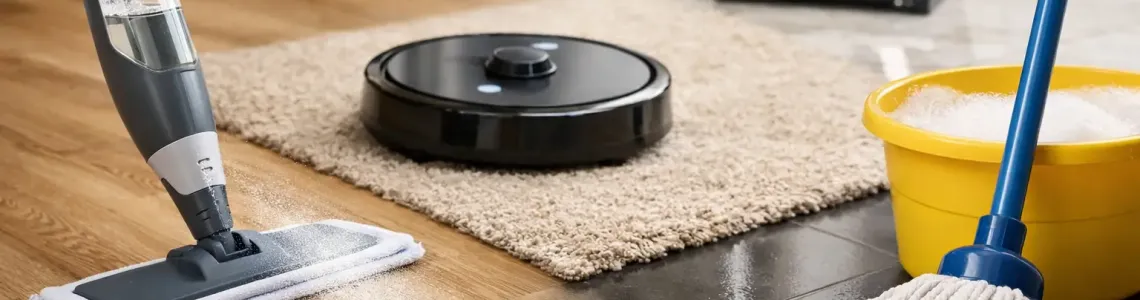
A good floor cleaner can underperform with the wrong mop. Traditional string mops hold plenty of water and work well for durable tile, but they can leave too much moisture on laminate or wood. Flat microfiber mops are excellent for regular cleaning because they pick up fine dust, use less water, and cover large rooms quickly.
For small spills, a spray mop or reusable microfiber cloth gives you control. It is often faster than filling a bucket and reduces the risk of overwetting delicate floors. For textured tile and grout, a soft scrub brush may be needed occasionally, but avoid stiff abrasive tools that can scratch protective coatings or wear down grout.
Robot mops and wet-cleaning machines need extra care. Only use formulas labeled as suitable for the machine when required. High-foam cleaners can affect performance, leave deposits in tanks and lines, or cause streaking across the floor. A low-foam robotic-cleaner detergent is designed to clean efficiently without creating a maintenance problem for the appliance.
A Simple Routine That Keeps Floors Looking Fresh
Most floors do not need an intense scrub every day. They need the right level of attention before grime becomes stubborn. Sweep or vacuum high-traffic areas several times a week, especially entryways, kitchens, dining spaces, and pet zones. Grit is abrasive, and removing it early helps protect the finish.
For regular mopping, work from the far side of the room toward the exit. Change dirty water or rinse the mop pad when it starts looking gray. Mopping an entire home with a saturated, dirty pad simply redistributes soil. For a large area, keeping a second clean microfiber pad nearby is an easy upgrade.
Spot-clean spills immediately when possible. Coffee, juice, sauce, muddy water, and pet accidents are easier to remove before they dry. This also protects grout and reduces the chance of staining on porous materials.
Deep-cleaning frequency depends on your household. A quiet apartment with no shoes indoors may need it far less often than a family home with children, pets, and daily cooking. The visible condition of the floor is your best signal. If it feels tacky, looks dull after mopping, or develops dark paths near doorways, it is time to reset your routine.
Common Mistakes That Make Floors Look Worse
More water is not better. This is one of the fastest ways to create swollen laminate edges, water marks, and prolonged drying times. Use a damp mop, not a dripping one, unless your floor manufacturer specifically permits heavier wet cleaning.
Another common mistake is mixing cleaning products. Combining formulas can reduce effectiveness, damage surfaces, or create unsafe fumes. Never mix bleach with other cleaners, and do not assume two pleasant-smelling products are compatible. Finish one product, rinse if needed, and allow the surface to dry before using another.
Skipping the dust-removal step also causes trouble. Fine grit turns into muddy streaks under a wet mop, while hair can cling to the pad and spread across the room. A quick sweep first gives your floor cleaner a fair chance to work.
Finally, do not judge a cleaner only on the first shine. A product that leaves a dramatic gloss but builds up over time may require more effort later. The better result is a floor that looks natural, feels clean underfoot, and stays that way between mopping sessions.
Make Every Clean Count
Choose floor cleaners based on your surface, your cleaning tool, and the mess you face most often. Keep a dependable everyday formula for regular maintenance, then add targeted products only when grease, stains, odors, or hygiene concerns call for them. With the right match, cleaning the floor becomes a quick reset for the whole room - not another chore you have to redo tomorrow.
Related Products
