







How to Clean Baby Highchair: A Safe Routine
A highchair can look clean right after breakfast and still hide banana paste under the tray rim, crumbs in the buckle, and yesterday's milk in the seat seams. Knowing how to clean baby highchair properly means dealing with the places you can see and the places food loves to collect. A quick wipe is useful between meals, but a reliable routine keeps sticky buildup, odors, and germs from turning mealtime into a bigger cleanup job.
Start by Checking Your Highchair Materials
Not every highchair should be cleaned the same way. Most have a removable plastic tray, a molded plastic or coated seat, fabric straps, and metal legs. Some models also include a padded insert, wooden frame, leather-look cushion, or a dishwasher-safe tray cover. Check the care label or manufacturer instructions before soaking straps, using disinfectant, or putting any part in the dishwasher.
This step matters because strong cleaners can dull plastic, damage protective coatings, fade fabric, or leave a residue on surfaces your baby touches and chews. For routine cleaning, mild dish soap and warm water are usually enough. Save heavier-duty cleaning for tough stains, greasy residue, or a highchair that has been sitting dirty for too long.
Before you begin, move the highchair away from food preparation areas and remove your child from the seat. Bring the tray, insert, and washable parts to the sink if they detach easily. Do not force clips or pull hard on straps. Small food particles can lodge in joints and release mechanisms, so a gentle approach protects the chair while getting it genuinely clean.
How to Clean Baby Highchair After Every Meal
The fastest way to stop grime from building up is to clean the chair while spills are still fresh. Dried oatmeal, sauce, and mashed vegetables take far more effort once they harden.
First, remove large crumbs and food scraps. Shake the tray over a trash can, then use a damp cloth or paper towel to lift loose pieces from the seat, tray edges, and creases. Do not push crumbs deeper into the harness slots or folding mechanism.
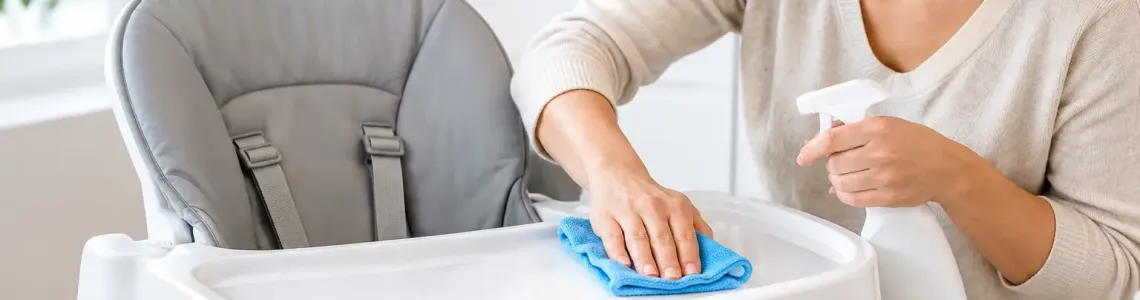
Next, wipe the tray and seat with a clean cloth dampened with warm water and a small amount of mild dish soap. Focus on the tray lip, cup holder, armrests, and the gap where the tray locks into place. These are high-contact areas that often get missed during a rushed cleanup.
Follow with a second cloth dampened with plain water to remove soap residue. This is especially useful on the eating surface, since babies may touch the tray and put their fingers straight into their mouths. Dry the area with a fresh towel or let it air-dry completely before the next meal.
If your child is particularly messy, keep a dedicated washable cleaning cloth near the dining area. A fast wipe now prevents stains later and keeps the highchair ready without reaching for harsh chemicals every time.
Deep-Clean the Tray, Seat, and Hidden Cracks Weekly
A weekly deep clean handles the food film that daily wiping leaves behind. Choose a time when you can take the chair apart calmly, rather than trying to clean around a hungry toddler.
Remove the tray, detachable cover, seat insert, and any washable accessories. Wash dishwasher-safe parts only if the manufacturer allows it. Otherwise, soak them in warm, soapy water for several minutes, then wash with a soft sponge. Avoid abrasive scrubbers on clear plastic or glossy surfaces because they can leave scratches that trap dirt and make the tray look cloudy.
For sticky, dried-on food, lay a warm damp cloth over the area for a few minutes. This softens the residue so you can lift it away instead of scraping aggressively. A soft toothbrush can help clean narrow tray grooves, buckle openings, and molded seams. Use it gently and keep it only for cleaning tasks.
Clean the seat carefully, including the underside and the area beneath removable cushions. Food frequently slides between the seat back and insert, where it can stay unnoticed. Wipe the sides, back, footrest, legs, and wheel areas if your highchair has them. Splashes do not stay neatly on the tray, especially when a baby is learning to self-feed.
For folding highchairs, inspect the hinges and locking points. Use a dry brush, cloth, or vacuum crevice tool to remove crumbs first. Avoid saturating these moving parts with water. Moisture left in joints can attract more dirt and may affect how smoothly the chair folds.
Clean Straps and Buckles Without Causing Damage
The harness is one of the dirtiest parts of a highchair because it catches food, drool, and spills directly against the fabric. It is also a safety component, so do not compromise it with rough cleaning methods.
If the straps are removable and machine-washable, follow the label exactly. Place them in a mesh laundry bag if recommended, use a gentle cycle, and air-dry them fully before reinstalling. High heat can weaken webbing, warp plastic components, or cause straps to shrink.
For fixed straps, wipe them with a cloth dipped in warm soapy water. Work from the top down and clean both sides of the webbing. Then wipe again with plain water and blot dry. Pay close attention to the buckle, crotch strap, and adjustment points, where food residue can become sticky and interfere with easy fastening.
Do not bleach straps unless the highchair manufacturer specifically approves it. Bleach can weaken fabric fibers and may leave an irritating residue. If the straps smell sour even after cleaning, or if they are frayed, cracked, or difficult to adjust, it may be time to replace them through the manufacturer.
When and How to Disinfect a Highchair
Cleaning removes visible food and grime. Disinfecting is a separate step used when there is a higher hygiene concern, such as illness in the household, a diaper leak, raw-food contamination, or a shared highchair used by multiple children.
Use a cleaner or disinfectant that is suitable for food-contact surfaces and follow the product instructions precisely. Contact time matters. If a product says the surface must stay wet for a certain number of minutes, wiping it off immediately will not deliver the intended germ-killing result.
After disinfecting the tray or any surface your baby may mouth, rinse or wipe with clean water if the product instructions require it. Let every part dry completely. Never mix cleaning products, especially bleach, disinfectants, vinegar, or ammonia-based formulas. Mixing products can create harmful fumes and is never worth the risk.
For everyday mealtime messes, there is usually no need to disinfect constantly. Mild soap and water, used thoroughly, are the practical answer. Reserve disinfecting for situations that truly call for it.
Tackle Stains and Odors Before They Set In
Bright foods can leave stubborn marks. Tomato sauce, berries, turmeric, and colored purees may stain plastic or fabric even when you clean quickly. Start with mild dish soap and warm water. If a stain remains on a hard plastic surface, try a paste made from baking soda and water, rubbing lightly with a soft cloth before rinsing well.
Test any stain remover on a hidden section first, especially on colored fabric inserts or coated materials. What works on a white plastic tray may discolor a patterned cushion. Avoid using perfume-heavy cleaners around your baby's eating space, since strong fragrance can linger.
Odors usually mean moisture or food residue is trapped somewhere. Check beneath the cushion, behind the seat back, inside tray channels, around the buckle, and under the footrest. Clean the area, wipe it with fresh water, and allow it to air-dry in a well-ventilated spot. Reassembling a highchair while parts are damp can encourage musty smells.
A Simple Routine That Keeps the Chair Ready
The easiest highchair to clean is one that never gets the chance to become a major project. Wipe the tray, seat, and straps after each meal. Once a week, remove washable pieces and clean under inserts, in seams, and around the buckle. After illness, leaks, or messy raw-food contact, clean first and disinfect only where appropriate.
Keep a close eye on damage as you clean. Cracked plastic, loose screws, broken tray locks, sticky buckles, and torn straps are not just cosmetic issues. Cleaning time is the best time to spot them before the next meal.
A clean highchair makes feeding less stressful because you are not starting every meal with yesterday's mess. Build the routine into your kitchen cleanup, use gentle products that match the chair's materials, and let the small daily wipe save you from a stubborn weekend scrub.
Related Products
