









-50x50.png "ClearWhite GlassRestore Pro | Polish Cermin Kereta | Car Glass Polish Watermark and Water Spot Remover | Polish Cermin Hadapan | Kesan Wiper")


-(1)-50x50.png "EziSac Lizard Repellent - Fast Acting Effective Natural Long-Lasting No Mess No Sticky Formula to Halau Cicak")

How to Clean Shower Glass Without Streaks
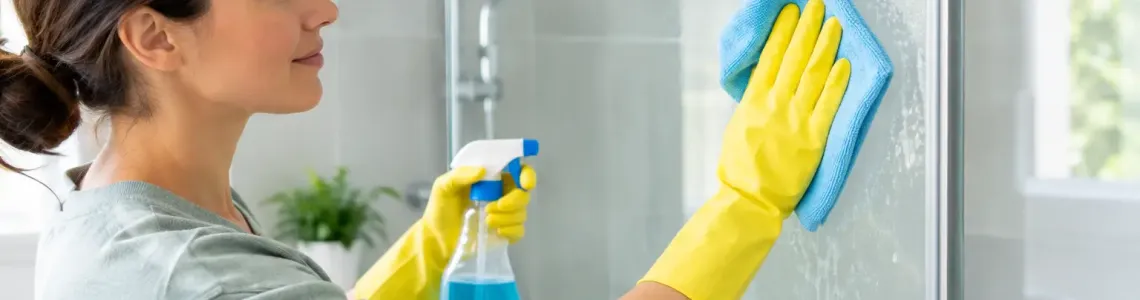
Those cloudy white marks on your shower door are not just ordinary dirt. They are usually hard-water minerals, soap residue, body oils, and leftover product buildup baked onto the glass after every hot shower. Learning how to clean shower glass properly means removing that film without scratching the surface or leaving fresh streaks behind.
The good news: you do not need specialist equipment. The right cleaner, a non-abrasive pad, and a few minutes of regular care can bring back clear, bright shower glass. For heavy buildup, patience matters more than aggressive scrubbing.
Why Shower Glass Turns Cloudy
Glass is smooth, but shower glass takes a daily beating. Water dries on the surface and leaves behind minerals such as calcium and magnesium. Soap, shampoo, conditioner, and body wash add another sticky layer that gives those minerals something to cling to.
If your water has a high mineral content, the spots can appear quickly and feel rough when you run a finger over the glass. A hazy film that feels smooth is more likely soap scum or oily residue. Most shower doors have both, which is why a quick wipe with water alone rarely fixes the problem.
There is also a difference between buildup and permanent damage. Mineral deposits sitting on the surface can usually be cleaned away. Glass that looks cloudy even after thorough cleaning may be etched, meaning acidic minerals have damaged the surface over time. Cleaning will still improve its appearance, but it cannot fully reverse etching.
What You Need to Clean Shower Glass
Start with a soft microfiber cloth, a non-scratch sponge or cleaning pad, a spray bottle, warm water, and a squeegee. Use rubber gloves if you are using a stronger bathroom or glass cleaner.
For light soap scum, a ready-to-use glass or bathroom cleaner is often enough. For hard-water spots, choose a cleaner made to break down mineral buildup. A mild vinegar-and-water mix can work on many untreated glass doors, but it is not the best choice for every shower. Avoid using vinegar on natural stone surrounds, marble, travertine, or nearby grout that may be sensitive to acid.
Skip steel wool, razor blades, rough scouring powders, and harsh abrasive pads. They can leave fine scratches that trap more residue and make the glass harder to keep clean. Also avoid mixing cleaning products. Bleach, ammonia, acids, and other chemicals should never be combined.
How to Clean Shower Glass Step by Step
Open a window or switch on the bathroom exhaust fan before you start. Good airflow makes cleaning more comfortable and helps the glass dry without streaks.
1. Rinse away loose residue
Use warm water to wet the glass. This loosens fresh soap residue and stops your cloth or pad from dragging dry grit over the surface. Pay attention to the lower edge of the door, corners, handles, and tracks, where shampoo residue and standing water collect.
2. Apply the right cleaner and let it work
Spray your cleaner over the glass from top to bottom. Do not immediately scrub it off. Give it a few minutes of contact time so it can soften the mineral and soap buildup.
This short wait is where many cleaning jobs go wrong. If you spray and wipe right away, you are mostly spreading residue around. Letting the formula sit means less scrubbing and better results. Keep the product off stone surfaces and follow the label directions, especially for concentrated or descaling formulas.
3. Scrub gently in overlapping sections
Use a damp non-scratch sponge or microfiber cloth. Work from the top down in small overlapping circles or straight passes. Apply extra attention to visible spots, but do not press so hard that you risk damaging seals, frames, or coated glass.
For stubborn white spots, reapply cleaner rather than escalating to a rougher pad. Heavy deposits may need a second treatment. If you can feel rough mineral scale after the first pass, let the cleaner sit again and repeat.
4. Clean the edges, hardware, and tracks
A clean center panel can still look neglected when the frame and tracks are grimy. Wipe the metal edges and door handle with a separate damp cloth. Use a small soft brush or an old toothbrush only for the tracks and tight corners, where residue tends to build up.
Do not flood the tracks with cleaner. Excess liquid can sit in the channel, attract more grime, and create an unpleasant smell. Wipe out loosened dirt and dry the area thoroughly.
5. Rinse completely
Rinse the glass with clean warm water until no cleaner remains. Leftover product is one of the main reasons glass looks streaky or develops a dull film after it dries. Check from different angles, because cleaner residue can be difficult to see straight on.
6. Squeegee and buff dry
Pull a clean squeegee from top to bottom, wiping the blade with a cloth after each pass. Finish by buffing the edges and any remaining droplets with a dry microfiber towel.
This final dry matters. It removes the water that would otherwise evaporate and leave new mineral spots behind. If your door has a hydrophobic coating, use only cleaners approved for coated glass and avoid abrasive scrubbing that can wear the protective layer down.
Removing Heavy Hard-Water Stains From Shower Glass
When shower glass has been ignored for months, one light cleaning may not be enough. You may need two or three sessions spaced over several days. This is safer than attacking the door with harsh chemicals or aggressive tools.
Start with a purpose-made hard-water or limescale cleaner that is suitable for shower glass. Apply it to a small test area first, especially if your enclosure has tinted glass, special coatings, metal trim, or stone tile nearby. Let it dwell as directed, scrub gently, rinse, and assess the result before treating the whole door.
For a low-cost household option, make a paste from baking soda and a small amount of water. Spread it over the damp, affected area, leave it briefly, then rub gently with a soft sponge before rinsing. Baking soda can help lift soap scum, but it may not be strong enough for severe mineral scale. Do not use it as a dry abrasive scrub.
If the cloudy patches remain unchanged after repeated cleaning and do not feel like surface buildup, the glass may be etched. At that point, a restoration service or replacement may be the realistic answer. Prevention will still help keep the damage from getting worse.
Keep Shower Glass Clear for Longer
The fastest way to clean shower glass is to stop residue from building up in the first place. A 20-second routine after each shower saves a much bigger weekend cleaning job.
Keep a squeegee in the shower and use it after the last person showers. Pull water from the glass, wipe the blade, and leave the door slightly open so moisture can escape. This is especially useful in busy family bathrooms where the glass stays wet for long periods.
Once or twice a week, spray the door with a gentle glass-safe cleaner and wipe it dry. A deeper clean every two to four weeks is usually enough for average use, although homes with hard water may need it weekly. It depends on how quickly white spots return and whether the shower gets proper ventilation.
A water-repellent glass treatment can also reduce spotting by helping water bead and roll away. These coatings are useful, but they are not a replacement for regular squeegeeing. They wear down over time and need reapplication according to the product instructions.
Common Shower Glass Cleaning Mistakes
Using too much cleaner is a common mistake. More product does not always mean more cleaning power, and excess product is harder to rinse away. Apply enough to cover the glass evenly, then give it time to work.
Another mistake is using the same dirty cloth for washing and drying. A cloth loaded with soap residue can put that film right back onto the glass. Keep one cloth for cleaning and a fresh, dry microfiber towel for buffing.
Finally, do not ignore the shower door seals. Strong acidic cleaners may affect rubber seals or metal finishes if left sitting too long. Clean these areas gently, rinse them well, and dry them after each deeper clean.
Clear shower glass is less about one miracle scrub and more about a simple repeatable habit. Use a glass-safe cleaner for the buildup you have, dry the door after use, and treat stubborn scale before it becomes a permanent-looking problem.
Related Products