






-50x50.png "ClearWhite GlassRestore Pro | Polish Cermin Kereta | Car Glass Polish Watermark and Water Spot Remover | Polish Cermin Hadapan | Kesan Wiper")


-(1)-50x50.png "EziSac Lizard Repellent - Fast Acting Effective Natural Long-Lasting No Mess No Sticky Formula to Halau Cicak")

How to Disinfect Baby Toys Safely at Home
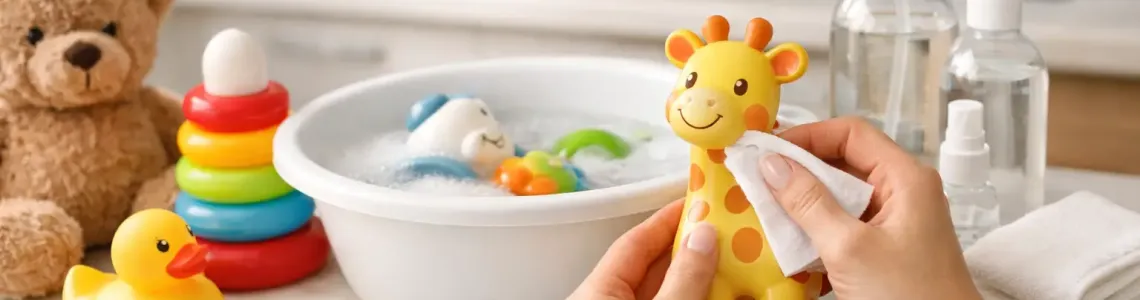
A teething ring dropped on the kitchen floor, a plush toy passed between siblings, and bath toys that never seem to dry inside - baby gear gets messy fast. Knowing how to disinfect baby toys helps you reduce germs without leaving behind harsh residue, damaging favorite toys, or turning a simple cleanup into an all-day project.
The practical rule is this: clean visible dirt first, then disinfect only when the situation calls for it. Regular cleaning handles everyday grime. Disinfection is most useful after a child has been sick, after a toy has been in a public play area, or when it has been contaminated by vomit, stool, pet mess, or another high-germ incident.
Clean First, Then Disinfect
Disinfectant does not work its best through layers of food, drool, sticky fingerprints, or dirt. Start by washing the toy with warm water and dish soap, using a clean cloth, sponge, or soft brush to reach grooves and textured areas. Rinse away the soap before moving on to a disinfecting step.
For many hard, nonporous toys, a household disinfecting spray or wipe can be convenient. Choose a product labeled for the surface you are treating and follow its directions exactly. That includes the contact time - the amount of time the surface must stay visibly wet to do its job. Wiping a spray off immediately may leave you with a toy that looks clean but has not been properly disinfected.
Once the required contact time has passed, rinse toys that babies are likely to mouth if the product label instructs you to do so. Let everything air-dry completely before returning it to your child. Do not rely on fragrance as proof that a toy is clean. A toy should be dry, residue-free, and safe to handle.
How to Disinfect Baby Toys by Material
One method does not fit every toy. Check labels, care instructions, batteries, seams, coatings, and small parts before you begin. When in doubt, use the gentlest effective option for that material.
Plastic, Silicone, and Rubber Toys
Solid plastic blocks, silicone teethers, stacking cups, and many rubber toys are usually the easiest to clean. Wash them in warm, soapy water first. If the manufacturer says the toy is dishwasher-safe, placing it on the top rack can be a useful cleaning option. Heat and strong detergent can warp some plastics, though, so do not guess.
For disinfection, use a baby-safe disinfectant product only as directed on its label. A diluted bleach solution is sometimes recommended by public-health guidance for certain hard, nonporous surfaces, but it must be measured correctly, used in a ventilated space, and kept away from children until the toy has been thoroughly rinsed and dried. Never mix bleach with vinegar, ammonia, bathroom cleaner, or any other cleaning product.
Teethers deserve extra attention because they go directly into the mouth. If a teether is cracked, sticky, cloudy, or has trapped moisture, replacement is often the safer and simpler choice than repeated heavy cleaning.
Fabric Toys and Plush Animals
Stuffed animals collect dust, drool, snack crumbs, and allergens, especially when they travel in strollers, cars, and daycare bags. Start with the care tag. Many plush toys can go in the washing machine on a gentle cycle inside a mesh laundry bag or pillowcase. Use regular laundry detergent, then dry according to the label.
A complete wash is often more useful than surface spraying for fabric toys. Disinfecting sprays may not penetrate deep into stuffing and can leave residue or discolor fabric. If a plush toy cannot be washed, spot-clean it with mild soap and a damp cloth, then allow it to dry fully. For illness-related contamination on a non-washable plush toy, consider setting it aside until it can be professionally cleaned or replaced.
Wooden Toys
Wood is durable, but it is not waterproof. Soaking wooden blocks or puzzles can cause swelling, splintering, peeling paint, and warped pieces. Wipe away dirt with a cloth lightly dampened with warm, soapy water, then wipe again with a separate clean damp cloth. Dry immediately with a towel and leave the toy in open air.
Avoid saturating unfinished wood or using harsh disinfectants unless the manufacturer specifically approves them. For most everyday use, careful cleaning and drying are the right approach. If wooden toys have deep cracks, flaking paint, mold growth, or damage that cannot be cleaned, remove them from play.
Electronic and Battery-Operated Toys
Musical toys, light-up activity panels, and talking books need a low-moisture approach. Turn the toy off, remove batteries if possible, and never spray liquid directly into buttons, speakers, charging ports, or seams. Apply a suitable disinfecting product to a cloth first, then wipe the exterior surfaces carefully.
Use only enough moisture to clean the surface. Follow the product and toy manufacturer instructions for contact time, and let the toy dry fully before replacing batteries. If liquid has entered the battery compartment, stop using the toy until it is completely dry and shows no corrosion.
Bath Toys Need a Different Routine
Bath toys look harmless, but warm water trapped inside squeezable toys can create an ideal place for mildew and mold. After every bath, empty out all water, rinse the toys, shake them dry, and store them where air can circulate. A closed bathtub caddy full of wet toys keeps moisture trapped and works against you.
If a bath toy has a hole and repeatedly holds water, inspect it often. Black specks, a musty smell, or slime inside are signs it is time to throw it away. You can reduce the problem by choosing bath toys without holes, or by sealing holes before the toy ever goes into the tub if that does not affect safety or the manufacturer instructions.
For washable bath toys, give them a regular deep clean, especially if several children share the tub. The goal is not to sterilize every item after every bath. It is to prevent moisture buildup before it becomes a mold problem.
When Should You Disinfect Toys More Often?
Daily disinfection is usually unnecessary in a healthy household. Overusing strong chemicals can be hard on materials, increase your workload, and create avoidable residue concerns. Instead, set a sensible routine based on how toys are used.
Increase cleaning and disinfection after illness in the home, when a toy has been shared with visitors, after it has been dropped in a public place, or when it has been contaminated with bodily fluids. Toys used by babies who are still putting everything in their mouths should also be cleaned more frequently than decorative toys or items used only by older children.
A simple rotation helps. Keep a small bin for toys that need cleaning, rather than trying to clean each item on the spot. At the end of the day, wash the high-touch items, disinfect when needed, and return only fully dry toys to the play area. This keeps the job quick and prevents damp toys from being packed away.
Avoid These Common Toy-Cleaning Mistakes
Do not spray disinfectant directly onto toys while your child is nearby. Do not mix cleaning products to make them “stronger.” Chemical combinations can create dangerous fumes and do not improve cleaning results.
Also avoid using boiling water on toys unless the manufacturer specifically says it is safe. High heat can distort plastic, weaken glued parts, and ruin electronic components. Fragrance oils and homemade cleaners may smell fresh, but they are not reliable disinfectants and may irritate sensitive skin.
Finally, do not forget storage. A freshly cleaned toy placed into a dirty basket, damp bath caddy, or crumb-filled car organizer quickly becomes dirty again. Wipe down toy bins and play surfaces as part of the routine.
Build a Routine That Works for Real Life
The best baby-toy cleaning routine is one you can repeat without stress. Keep mild soap, clean cloths, a soft brush, and a suitable surface disinfectant within reach but securely stored away from children. Clean everyday messes as they happen, reserve disinfecting for higher-risk situations, and always give toys time to dry.
A clean toy does not need to smell like chemicals or look factory-new. It needs to be free of visible grime, handled safely for its material, and ready for the next round of chewing, stacking, splashing, and play.
Related Products
