









Kitchen Degreasers Malaysia That Cut Grease Fast
A sticky stovetop is rarely just a stovetop problem. Cooking oil travels onto the backsplash, cabinet handles, range hood filters, and even the floor around the prep area. The right kitchen degreasers Malaysia households choose can break through that buildup quickly, without turning a simple cleanup into an exhausting scrub session.
Grease needs more than a quick wipe with dish soap once it has cooled, hardened, or mixed with dust. A purpose-made degreaser helps lift oily residue so you can wipe it away instead of spreading it across the surface. The best choice depends on what you are cleaning, how heavy the buildup is, and whether children, pets, or food-prep surfaces are nearby.
What Makes a Kitchen Degreaser Work?
A degreaser is designed to loosen fats, oils, and cooked-on food residue. Its active cleaning agents surround oily particles and help water carry them away. That is why a good spray can make a greasy hood panel or stovetop feel less slippery within minutes.
Not every greasy mess needs the strongest formula. For daily splatters around a cooktop, a ready-to-use kitchen cleaner is often enough. For yellowed range hood filters, greasy wall tiles, or cabinet tops above the stove, you may need a heavier-duty degreaser and a little dwell time.
The key is to let the product work before wiping. Spraying and immediately rubbing can waste product and leave streaks behind. Apply an even layer, wait according to the label directions, then wipe with a clean microfiber cloth or non-scratch sponge. For thick grease, repeat the process rather than using excessive force.
Kitchen Degreasers Malaysia Shoppers Should Match to the Surface
The label matters, but the surface matters just as much. A powerful cleaner that works beautifully on stainless steel may be unsuitable for unsealed stone, painted cabinets, or aluminum parts. Choosing by surface protects the finish while still delivering a visible clean.
Stovetops and Burner Areas
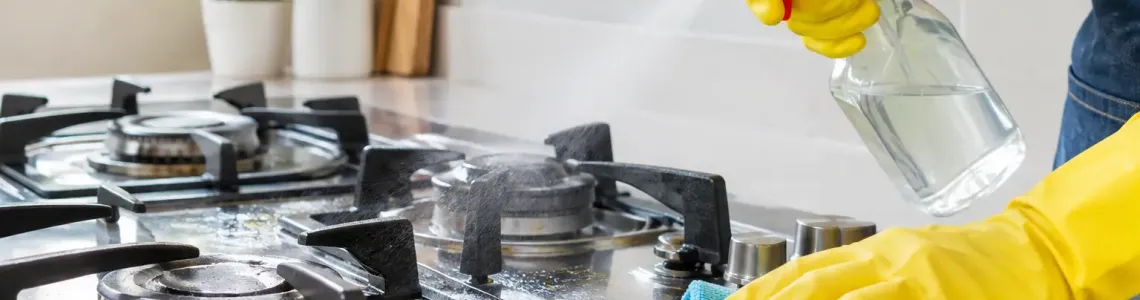
Glass, ceramic, stainless steel, and enamel stovetops all collect oil splatter. Start only after the surface has cooled completely. Spray the degreaser onto a cloth or directly onto the surface if the label allows it, then allow it to sit briefly.
Use a soft sponge or microfiber cloth for everyday grease. Avoid steel wool, harsh scouring pads, and aggressive scraping on glass or coated surfaces. They can remove grease, but they can also leave scratches that make future cleaning harder. For burnt rings around burners, several short applications are safer than one long soak with an overly harsh product.
Range Hoods and Filters
Range hoods are often ignored until the filter feels tacky or the outer panel turns dull. This is one of the areas where grease can build up quietly, especially in homes that fry, stir-fry, grill, or cook with strong aromatics often.
Remove washable filters only if the manufacturer permits it. Apply degreaser in a sink or tray, let it work, then rinse thoroughly and dry before reinstalling. Do not spray electrical controls, motors, lights, or vents directly. For the outside of the hood, spray onto a cloth first to keep product from running into seams.
Backsplashes, Tiles, and Grout Lines
Tiles near the stove may look clean until light catches a greasy film. A kitchen degreaser can cut through this residue quickly, especially on smooth glazed tile and glass backsplashes. Wipe from top to bottom so dirty cleaner does not drip over areas you have already finished.
Grout needs more care. Porous or damaged grout can absorb strong products, and frequent use of aggressive cleaners may affect sealers over time. Test a hidden area first, use a soft brush only when needed, and rinse away residue with a damp cloth.
Cabinets, Countertops, and Appliance Exteriors
Cabinet doors near the stove collect fingerprints mixed with cooking oil. For laminate and sealed painted cabinets, use a gentler degreaser and avoid soaking edges or joints. Excess liquid can seep into seams and cause swelling or finish damage.
Countertops require a compatibility check. Stainless steel and most sealed solid surfaces can usually handle everyday degreasing, but natural stone, unsealed wood, and specialty coatings may need a cleaner specifically approved for that material. Never assume a heavy-duty oven or grill cleaner is safe for every counter.
For refrigerator doors, microwaves, and small appliances, spray the cloth rather than the appliance. This gives you better control around buttons, vents, displays, and electrical openings.
A Fast Routine for Greasy Kitchens
The fastest way to deal with grease is to stop it from becoming a thick layer. A short wipe after cooking is far easier than a deep clean after several weeks. Keep a suitable degreaser, microfiber cloth, and non-scratch sponge close to the kitchen so the job is easy to start.
For a practical weekly routine, wipe the cooktop and backsplash after heavy cooking, clean cabinet handles and appliance fronts, then check the hood exterior. Once a month, inspect the areas people miss: the top of the hood, the wall beside the stove, the underside of cabinets, and the floor around the cooking zone.
If grease is already heavy, work in sections. Treat the hood first, then the backsplash, cooktop, and cabinets. Using one clean cloth for wiping product away and another damp cloth for the final rinse helps prevent a sticky film from returning to the surface.
Use Degreasers Safely Around Food, Kids, and Pets
Powerful cleaning should not mean careless cleaning. Keep food, utensils, and dishes away from the area before applying any kitchen degreaser. After cleaning counters, stovetops, or other food-contact surfaces, wipe again with a clean damp cloth as directed on the product label.
Good ventilation is especially helpful when cleaning a range hood, oven exterior, or enclosed kitchen. Open windows, switch on ventilation if appropriate, and avoid breathing directly over a freshly sprayed surface. Wear gloves if you have sensitive skin or are handling concentrated products.
Never mix degreasers with bleach, acids, or other cleaning chemicals. Combining products can produce irritating fumes or reduce cleaning performance. Store cleaners upright, secured, and out of reach of children and pets.
A product described as gentle or plant-based can still require normal precautions. “Natural” does not automatically mean safe for every surface, every pet, or every cleaning task. Read the instructions, follow dilution guidance for concentrates, and test an inconspicuous spot when you are unsure.
When a Degreaser Is Not the Right Answer
A greasy surface may also have limescale, burnt sugar, rust, mold, or deep staining. Degreaser is excellent at oil, but it is not a one-product fix for every kitchen problem. A cloudy faucet, for example, may need a scale remover, while a stained silicone seal may need a different type of targeted cleaner.
Likewise, badly carbonized oven interiors may need an oven-specific formula rather than a general kitchen spray. Use the product designed for the problem. You will usually get better results with less scrubbing and less risk to the surface.
For daily oil splatter, a ready-to-use spray keeps cleanup simple. For built-up grease around filters and high-heat cooking zones, choose a stronger formula that clearly states its compatible surfaces and directions. Starmeg makes it easier to shop by the problem you want gone, whether that is greasy kitchen surfaces, stubborn stains, or the cleaning tasks that keep coming back.
A cleaner kitchen is not about chasing perfection after every meal. Choose a degreaser that fits your surfaces, use it correctly, and tackle grease while it is still fresh. Your cooktop, hood, and cabinets will stay easier to maintain - and your next cleanup will take far less effort.
Related Products