









Non Scratch Scrubber for Safe Everyday Cleaning
A non scratch scrubber sounds simple until a cloudy glass cooktop, dull nonstick pan, or hazy car panel proves otherwise. The wrong cleaning pad can leave fine marks that only show up in direct light - and once they are there, no cleaner can truly put the original finish back. Choosing the right scrubber protects the surfaces you clean most while still giving you the friction needed to lift grease, food residue, soap scum, and everyday grime.
How a Non Scratch Scrubber Protects Surfaces
A non-scratch label usually means the scrubber is designed for delicate finishes. That can include nonstick cookware, stainless steel, glass, ceramic, coated appliances, plastic containers, bathroom fixtures, and finished vehicle surfaces. These scrubbers use softer fibers, open-cell foam, microfiber, or gentle nylon mesh instead of harsh mineral abrasives.
But “non scratch” does not mean “safe in every situation.” A soft sponge can still drag sand, dried grit, or a tiny metal particle across a glossy surface. The tool matters, but so does what is trapped in it. Rinse your scrubber before use, especially after cleaning a greasy stovetop, outdoor furniture, or a sink with food debris.
The cleaning product also plays a role. A mild dishwashing liquid or surface-safe cleaner helps loosen soil so you do not need to press hard. When you find yourself scrubbing aggressively, stop and give the cleaner a minute to work. More pressure is often how a safe pad becomes a surface-damaging one.
Choose a Non Scratch Scrubber by Surface
There is no single scrubber that is best for every room. The right choice depends on the finish, the type of dirt, and how often the surface needs cleaning.
Nonstick pans and bakeware
For nonstick cookware, use a soft foam sponge, a gentle nylon scrub pad, or a silicone scrubber. Avoid steel wool, scouring powder, and heavy-duty green pads unless the cookware maker specifically says they are safe. Even a small scratch in a coating can make food stick more easily and shorten the life of the pan.
For burnt-on food, soak the pan in warm water with dish soap first. Then use the non-scratch side of the sponge in small, controlled strokes. If residue remains, repeat the soak rather than escalating to an abrasive tool.
Glass, mirrors, and glass cooktops
Glass needs a light touch. A microfiber cloth is usually best for regular cleaning because it picks up grease and fingerprints without leaving lint. For stuck-on splatters on a glass cooktop, use a non-scratch scrubber with a suitable cooktop cleaner, then wipe away loosened residue with a clean cloth.
Do not use a dirty kitchen sponge on glass. The sponge may be soft, but dried crumbs and grit caught in its fibers can create faint scratches. Keep a separate cloth or pad for glass surfaces if you want a streak-free finish.
Stainless steel sinks and appliances
Stainless steel is durable, but it can lose its polished look when scrubbed against the grain or cleaned with harsh pads. Use a non-scratch sponge or soft microfiber cloth and wipe in the direction of the steel’s grain. This helps maintain a more even finish and reduces visible streaking.
For water spots and fingerprints, a gentle cleaner and a dry finishing wipe usually work better than hard scrubbing. If the stain is stubborn, treat it with the right product first instead of reaching for an aggressive scouring pad.
Bathroom fixtures, tiles, and tubs
Soap scum can make chrome faucets, shower screens, and acrylic tubs look dull fast. A non-scratch scrubber is ideal for weekly cleaning because it removes buildup without roughening the finish. Pair it with a bathroom cleaner that targets soap residue and mineral marks.
Be more careful with acrylic, fiberglass, and coated tubs. These materials scratch more easily than ceramic tile. Use gentle circular motions, rinse thoroughly, and avoid powder cleansers that can leave a rough, faded-looking patch.
Cars, motorcycles, and painted surfaces
A kitchen scrubber does not belong on automotive paint, even if it says non-scratch. Vehicle clear coats need dedicated wash mitts, soft detailing sponges, or microfiber wash pads made for paintwork. A standard household pad may feel soft in your hand but can hold road dust that creates swirl marks.
Rinse the vehicle first to remove loose grit. Use plenty of water and car shampoo, clean one section at a time, and rinse the mitt regularly. Save household non-scratch scrubbers for wheels, rubber mats, plastic trim, or other areas where the product instructions confirm compatibility.
When a Soft Scrubber Is Not Enough
A non-scratch scrubber is built for safe, repeat cleaning, not for every extreme mess. Thick oven grease, mineral scale, rust marks, baked-on carbon, and hardened adhesive may need a targeted cleaner or a purpose-built tool. Forcing a gentle scrubber to tackle heavy buildup usually means more pressure, more time, and a higher chance of damage.
This is where a simple cleaning sequence delivers better results: loosen the mess, lift it with the right tool, then rinse or wipe away the residue. Let a degreaser work on greasy range hoods. Use a limescale remover designed for bathroom deposits. Treat stains with a surface-appropriate formula before you scrub.
A strong cleaner is not automatically the better cleaner, either. Check whether it is suitable for food-contact surfaces, natural stone, painted finishes, or plastic before use. Always follow the label, ventilate the area when needed, and never mix cleaning chemicals.
Four Habits That Keep Scrubbers Safe
A good non-scratch scrubber lasts longer and cleans better when you use it with a little care:
- Rinse it thoroughly after every use to remove grease, crumbs, and cleaning product residue.
- Keep separate scrubbers for dishes, bathrooms, and general household cleaning to avoid cross-contamination.
- Replace it when it smells, tears, feels greasy after rinsing, or begins holding debris in the fibers.
- Test a new scrubber and cleaner on a hidden spot when cleaning painted, coated, glossy, or unfamiliar surfaces.
Do not store a wet sponge in a closed container or flat in a puddle by the sink. Let it drain and air-dry between uses. This reduces odor and helps prevent the buildup that can turn a fresh-looking pad into a germy one.
What to Look for Before You Buy
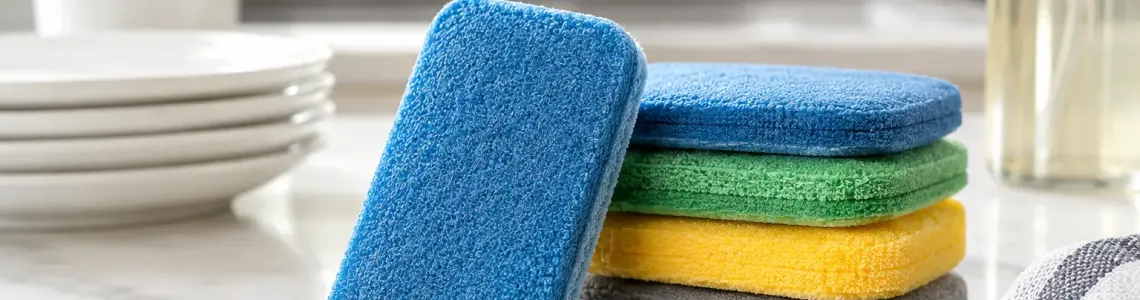
Start with the surface, not the color of the sponge. Scrub pads are often color-coded, but colors are not universal standards between brands. Read the package for specific compatibility claims such as nonstick-safe, glass-safe, stainless-safe, or suitable for delicate surfaces.
The shape matters too. A slim pad reaches inside glasses and around faucet bases. A thicker sponge holds more soap and is comfortable for dishes and countertops. A handled brush keeps your hands away from grime and works well on textured surfaces, but check that its bristles are soft enough for the job.
For a busy home, keeping a small set of purpose-matched cleaning tools is more practical than relying on one tired sponge for everything. A gentle dish scrubber, a microfiber cloth for glass, a bathroom pad, and a vehicle-safe wash mitt cover most regular cleaning without risking the surfaces you paid to maintain.
The best non scratch scrubber is the one that matches the surface, the mess, and the cleaner in your hand. Start gentle, let the formula do its job, and reserve heavy-duty tools for surfaces that can handle them. That habit keeps everyday cleaning fast while helping your kitchen, bathroom, and car stay cleaner-looking for longer.