








-50x50.png "ClearWhite GlassRestore Pro | Polish Cermin Kereta | Car Glass Polish Watermark and Water Spot Remover | Polish Cermin Hadapan | Kesan Wiper")


Pigeon Repellent for Balcony That Actually Works
Pigeons do not need much encouragement to claim a balcony. A flat railing, a sheltered air-conditioning ledge, and a few crumbs can quickly turn into daily droppings, feathers, noise, and blocked drains. The right pigeon repellent for balcony use is not usually one magic spray. It is a practical combination of removing what attracts birds and making their preferred landing spots uncomfortable or inaccessible.
If pigeons are returning every morning, act early. A pair that is only resting on the rail is easier to deter than birds that have started nesting behind planters, storage boxes, or outdoor units.
Start by finding out why pigeons chose your balcony
Pigeons return to places that feel safe, dry, and predictable. Food is the obvious reason, but it is not the only one. Open pet-food bowls, bird feeders nearby, uncovered trash, and spilled rice or snacks all make a balcony more appealing. So do quiet corners where birds can perch without being disturbed.
Clean the balcony first, especially old droppings and nesting material. Wear gloves and a mask, wet droppings before wiping to reduce dust, then use a suitable outdoor surface cleaner or disinfectant. Do not sweep dry debris into the air. A clean balcony removes scent cues and makes it easier to see where birds are landing most often.
Next, inspect the layout. Look for broad rails, window ledges, air-conditioning compressor tops, pipe runs, and the tops of cabinets. These are the real targets for a pigeon repellent plan. Treating the floor while leaving the favorite rail untouched will not solve the problem.
The best pigeon repellent for balcony areas depends on the perch
A good solution matches the surface, the severity of the bird problem, and how you use the space. Renters may need removable options, while homeowners or property managers may prefer a longer-lasting physical barrier.
Physical barriers give the most reliable results
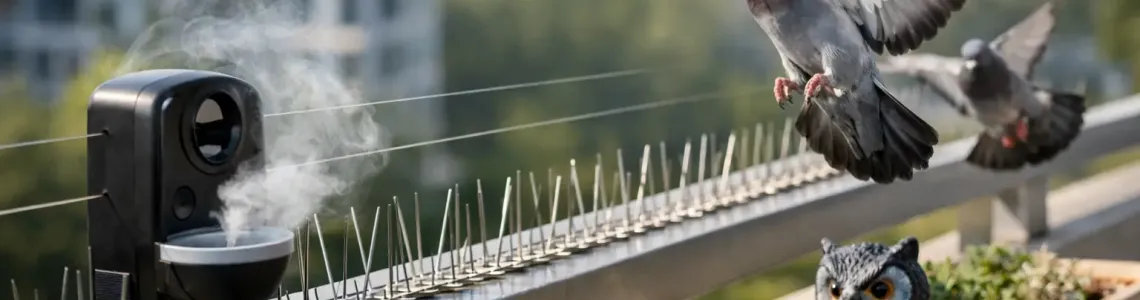
For a balcony that pigeons visit daily, physical deterrents are usually the strongest answer. Bird spikes prevent pigeons from landing on narrow rails, ledges, signs, and pipe edges. They do not harm birds when correctly installed. Instead, they remove the flat landing area pigeons depend on.
Choose spikes sized for pigeons rather than very small spikes intended for smaller birds. Measure the rail or ledge before buying, and clean and dry the surface so adhesive or mounting clips can hold properly. Cover the whole landing zone. Leaving a gap at one end often gives pigeons exactly the space they need.
Bird netting is better for open balconies, especially where pigeons are entering from multiple angles or trying to nest. Properly fitted netting creates a complete barrier while still allowing airflow and daylight. It takes more planning than spikes, but it is often the best option for upper-floor apartments with frequent bird activity.
For wide ledges, consider a sloped cover or tightly tensioned wire system. The goal is simple: no stable, flat place to stand. These options can look neater than spikes in visible areas, although installation may be more involved.
Repellent gels and sprays can support the setup
Repellent gels create a sticky or unstable feeling that discourages birds from perching. They are useful on selected ledges and rails, but they are not always the cleanest choice. In hot, dusty, or rainy conditions, gel can collect debris and may need regular replacement. Keep it away from areas children, pets, or people may touch.
Scent-based pigeon repellent sprays can help make a treated area less inviting, particularly after cleaning. They are most useful as a supporting measure around rails, ledges, and corners rather than the only defense. Outdoor weather reduces how long a spray lasts, so follow the label for reapplication and do not expect a one-time treatment to last forever.
Use any pest-control product exactly as directed. A household repellent should never be sprayed on food-contact surfaces, pet bowls, toys, or plants unless the label specifically says it is safe to do so. If your balcony is enclosed, make sure there is adequate ventilation during application.
Visual deterrents work best as a short-term extra
Reflective tape, moving streamers, pinwheels, and predator decoys can startle pigeons at first. The trade-off is that pigeons learn quickly. A fake owl that never moves may become part of the furniture within days.
These tools can still be useful when paired with barriers. Rotate their position, choose items that move in the wind, and use them to make a newly protected balcony feel less familiar. Think of visual devices as an extra layer, not the main solution.
What usually fails, and why
Many balcony fixes fail because they address the wrong behavior. Ultrasonic devices may promise hands-free control, but outdoor sound disperses quickly and birds can become accustomed to repeated noise. They may be worth trying in a small, enclosed space, but they should not replace physical exclusion.
Loose netting is another common mistake. If it sags, pigeons may land on it, become trapped, or find openings at the sides. Netting must be taut and securely attached around the perimeter.
Do not rely on strong household chemicals, mothballs, chili mixtures, or harmful homemade methods. These can create health risks for people and pets, damage balcony finishes, and cause unnecessary harm to wildlife. A practical pigeon solution should keep birds away, not injure them.
Feeding birds "somewhere else" also tends to backfire. Once pigeons associate your home with food, they will continue checking the balcony. Keep food sources off the balcony entirely and make sure garbage is covered.
A simple action plan for recurring pigeon problems
If you need results without turning balcony maintenance into a full-time job, start with the areas pigeons use most. Clean thoroughly, remove food and water sources, then install a physical deterrent on the main rail or ledge. Add a properly labeled repellent spray or visual device only as support.
For a light problem, such as occasional pigeons resting on a rail, a cleaned surface plus spikes or moving reflective deterrents may be enough. For repeated droppings, nesting attempts, or multiple birds, use netting or full ledge coverage before the nesting area becomes established.
Check the setup after heavy rain, strong wind, or a few days of bird activity. Reattach loose edges, replace worn tape, and clean around barriers so debris does not create new nesting material. Prevention works best when it is maintained, not installed once and forgotten.
Protect drains, plants, and outdoor equipment
Pigeon droppings can clog balcony drains and stain tiles, furniture, and air-conditioning equipment. Keep drain covers clear and inspect corners behind planters or storage units. Move planters slightly away from rails and walls if they create a sheltered nesting pocket.
If you grow herbs or vegetables, cover them with a suitable plant-safe mesh rather than applying repellent directly to edible plants. Keep outdoor cushions and laundry out of the way while you clean or apply any product. These small adjustments protect the balcony from both birds and the cleanup they leave behind.
When to call building management or a professional
If pigeons are nesting in an inaccessible area, entering through a building gap, or gathering in large numbers, report the issue to building management. In apartments and condos, exterior ledges, facade gaps, and shared structures may require approved installation methods.
Professional bird-control help is also sensible when there are eggs, chicks, extensive droppings, or difficult access points. Do not remove an active nest without checking local rules and building requirements. The safest long-term fix may involve sealing entry gaps and installing building-approved exclusion measures.
A balcony should be a place for fresh air, plants, and a quiet coffee, not a daily bird-dropping cleanup. Choose a pigeon repellent approach that blocks the landing spot, keep the space clean and food-free, and check it regularly. That is how you make pigeons move on and keep your balcony comfortable.
Related Products