







Safe Household Cleaners Guide for Every Room
A cleaner that removes greasy fingerprints from the fridge but leaves a sharp chemical smell around your child’s snack area is not the right answer. The best cleaning routine balances visible results with sensible product choices, clear instructions, and safe storage. This safe household cleaners guide helps you build that routine room by room, without buying a different bottle for every small mess.
Start With the Job, Not the Marketing Claim
“Natural,” “plant-based,” and “non-toxic” can sound reassuring, but they do not automatically mean a product is safe for every surface, pet, or child. A citrus-based degreaser can still irritate skin. Essential oils may be unsuitable around certain pets. A disinfectant can be highly effective when used correctly but unnecessary for an ordinary dusting job.
Choose a cleaner based on what you need it to do. For everyday dirt, crumbs, and light grease, a gentle all-purpose cleaner is often enough. For soap scum, hard-water marks, cooking grease, mildew, stains, or germs after illness, use a product made specifically for that problem. Targeted products reduce guesswork and help prevent surface damage from using a strong chemical where a mild cleaner would work.
Read the full label before the first use, not after a spill. Check the intended surface, dilution directions, required contact time, ventilation advice, and warnings about children and pets. A cleaner is only as safe as the way it is used.
The Safe Household Cleaners Guide: Your Core Kit
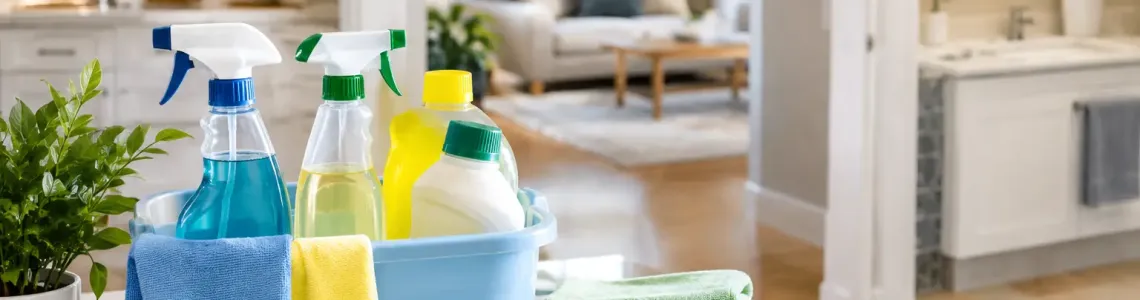
Most homes do not need a crowded cabinet of half-used sprays. A practical kit can handle daily maintenance while keeping stronger treatments available for tougher jobs. Start with a pH-balanced all-purpose cleaner for sealed counters, tables, cabinets, and other washable hard surfaces. Add a dish soap for hand-washing dishes and cutting light grease, a glass cleaner for mirrors and windows, and a floor cleaner matched to your flooring type.
Keep a stain remover for laundry accidents, upholstery spots, and food spills. If you need to disinfect high-touch areas during sickness or after raw-food preparation, choose a registered disinfectant and follow its label contact time. Spraying and wiping it away immediately may clean the surface, but it may not disinfect it.
For households with babies, pets, or curious toddlers, low-odor and no-rinse options can be convenient for routine cleaning. That said, “kid-safe” or “pet-safe” still means the product should be stored out of reach, kept off food, and used according to directions. No household cleaner should be treated as harmless if swallowed or splashed into eyes.
Clean First, Disinfect Only When It Helps
Cleaning and disinfecting are different jobs. Cleaning physically removes dirt, oils, and many germs from a surface. Disinfecting is designed to kill or inactivate certain germs, but it works best on a pre-cleaned surface and requires the product to remain wet for the stated time.
For most daily jobs, cleaning is enough. Wipe dining tables, kitchen counters, bathroom sinks, and frequently handled surfaces with an appropriate cleaner and a clean cloth. Save disinfectants for situations that call for them, such as someone being sick at home, a contaminated bathroom surface, pet accidents, or areas touched after handling raw meat.
Using disinfectant constantly can waste product, add unnecessary fumes, and sometimes dull sensitive finishes. The smart approach is not the strongest cleaner every time. It is the right cleaner, used correctly.
Match the Product to the Surface
A powerful cleaner can leave permanent marks if it is wrong for the material. Before treating a large area, test a small hidden spot, especially on painted furniture, stone, wood, fabric, and specialty flooring.
Kitchen counters and appliances
Sealed laminate, stainless steel, ceramic tile, and many solid surfaces respond well to an all-purpose cleaner or diluted dish soap. Use a microfiber cloth to lift grease instead of pushing it around. For stainless steel, wipe with the grain and buff dry to avoid streaks.
Avoid using acidic cleaners on natural stone such as marble, travertine, or limestone. Acid can etch the finish and leave dull spots that will not simply wipe away. For stone, use a product labeled safe for natural stone or a mild pH-neutral cleaner.
Glass, mirrors, and shiny surfaces
Use a dedicated glass cleaner and a lint-free microfiber cloth. Spray the cloth lightly rather than soaking the glass, especially near painted frames or electronic controls. Too much product is one of the main reasons mirrors streak.
Floors
Floor cleaning depends on the finish. Tile can usually handle a suitable floor cleaner, while laminate, vinyl, hardwood, and engineered wood need less moisture. Never flood a wood or laminate floor. Use a well-wrung mop and dry excess water quickly, because standing moisture can swell edges, weaken adhesives, and leave cloudy marks.
If you use a robot mop or wet-cleaning machine, use detergent designed for that system. Regular dish soap can foam excessively, leave residue, or affect machine performance. A compatible low-foam formula keeps floors cleaner without creating a maintenance problem inside the appliance.
Bathrooms
Bathroom grime is usually a mix of soap residue, body oils, mineral buildup, and moisture. Use a bathroom cleaner for sinks, showers, tubs, and tile, then rinse where the label requires it. Drying shower glass and fixtures after use can reduce water spots and cut down on the need for stronger cleaners later.
Mildew around seals and grout may need a dedicated treatment. Improve ventilation as well, because a cleaner can remove visible buildup, but constant humidity invites it back.
Never Mix Cleaning Products
This rule deserves zero shortcuts. Never mix bleach with ammonia, acids, vinegar, toilet-bowl cleaner, rust remover, or any unknown cleaning product. Dangerous fumes can form quickly, even in a small bathroom or laundry area.
Do not combine products in a spray bottle to make a “stronger” homemade formula. If one cleaner does not work, rinse the surface thoroughly, allow the area to air out, and use a different compatible product later. More chemicals do not automatically mean more cleaning power.
If fumes make you cough, feel dizzy, or irritate your eyes, leave the area immediately and get fresh air. Follow local poison-control or emergency guidance if exposure is serious.
Use Less Product, Get Better Results
Overusing cleaner is a common mistake. Extra product can leave a sticky layer that attracts dust, makes floors look dull, and causes streaks on glass. Concentrated products are especially easy to overpour.
Measure concentrates as directed, use clean water for dilution, and label any diluted bottle with the product name and date. Do not reuse food or drink containers for cleaning chemicals. A child or guest should never have to guess what is inside a bottle.
Microfiber cloths, scrub pads suited to the surface, and a good mop often make a bigger difference than switching cleaners. Use separate cloths for the kitchen, bathroom, and general dusting. Wash reusable cloths regularly so yesterday’s grease does not become today’s smear.
Store Cleaners Like They Matter
Safe cleaning continues after the bottle is closed. Keep products in their original containers with labels intact, away from food, heat, and direct sunlight. A high cabinet or locked storage area is the safest choice for homes with children and pets.
Do not leave sprays, pods, or open buckets unattended while cleaning. Close caps promptly, and never allow children to help with chemical products unless the activity is age-appropriate and directly supervised. Even products made for routine household use deserve careful handling.
For a practical home-maintenance setup, keep your everyday surface, glass, floor, and stain solutions easy to reach, while storing stronger bathroom treatments, disinfectants, and pest-control products separately and securely. Starmeg’s solution-focused approach makes it easier to shop by the actual problem instead of filling your cart with duplicates.
A safe home does not have to smell heavily perfumed or look like a laboratory. Choose products that fit the surface and the mess, follow the label every time, and let simple habits do the hard work. A dry shower, a promptly wiped spill, and a properly stored cleaner will protect your home long after the cleaning session ends.